



Sizing
> How do size their shoes?
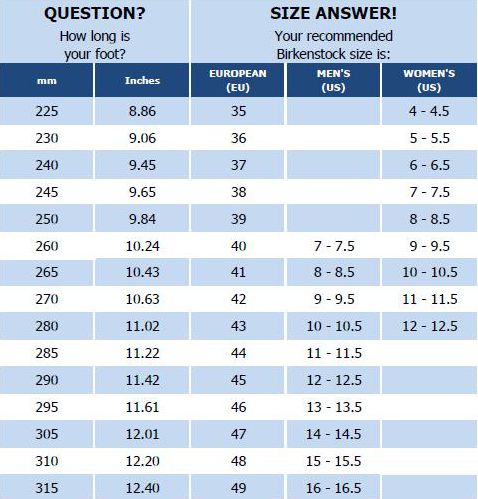
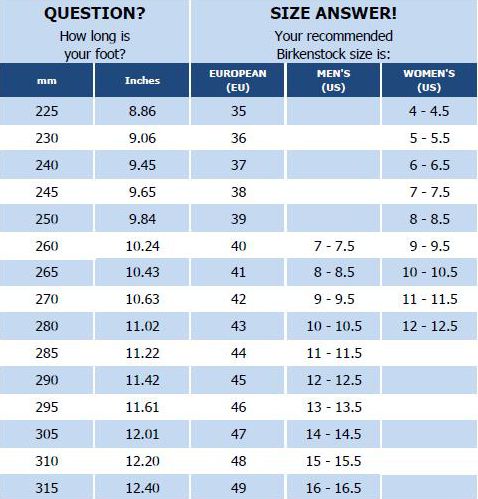
Our use a european sizing scale for their shoes. These can be converted into U.S/Australian sizes using the below sizing chart. For example, and as a guide only, a European 39 would be a Women's 8-8 1-2 or Men's 6-6 1/2.
> What is the difference between the Narrow and Regular width?
Most models are made in two different widths; narrow or regular. In general the narrow fitting is designed for those who don't have a broad toe box and overall have slender feet. The width of the narrow fitting is about 3mm - 4mm less than the regular. Most people are suited to wearing a regular fitting width but if you often wear narrow shoes and are told you have a slim profile foot, the narrow would most likely be the better option.
> Why do shoes look wide?
They look wider than most shoes because the design follows the natural shape of the foot. Many shoe styles feature a narrow toe area, which not only compresses the toes, but throws the foot out of alignment. The shape of your shoes guide the toes and feet into correct alignment so the weight is evenly distributed and good posture is possible.
> Why do the soles feel so firm? Is there a break in period?
Some people find their shoes immediately comfortable. For others, it takes a few hours a day for a week or two to break them in. Although the shoes may feel ridged at times, remember that the firm support is essential for the orthotic benefits of footwear. They will become more flexible with wear. The uppers will become more supple and the footbeds will adjust slightly to your feet. If your feet are unaccustomed to the contour footbed, start gradually. wearing your footwear no more than 1-2 hours a day for around 7-14 days.
> What makes footwear so special?
Think of as a performance shoe, orthopedically designed and constructed to offer comfort and support that other shoes just can't match.
Most sandals are made to last one, maybe two seasons at the most. on the other hand, are made to last a long time. Quality materials give durability and long lasting good looks. The reparability of footwear extends the life of the shoes, making this investment even sounder. With proper care and maintenance you can make your last for years. are an investment for your feet.
Think of as a performance shoe, orthopedically designed and constructed to offer comfort and support that other shoes just can't match.
Most sandals are made to last one, maybe two seasons at the most.on the other hand, are made to last a long time. Quality materials give durability and long lasting good looks. The reparability of footwear extends the life of the shoes, making this investment even sounder. With proper care and maintenance you can make your last for years. are an investment for your feet.
> Will footwear make my feet spread?
Shoes will not give your feet a new shape! Feet that have been squeezed into traditional shoes may resume their original natural shape, depending on the flexibility of your feet.
> How long do last? Are they guaranteed for any period of time?
While there is no set guarantee period, with proper care, footwear can provide years of comfort. Everything that goes into the shoe is top quality - from the suede, jute and cork of the footbed, to the leather, suede and nubuck used to create the uppers. The result is footwear that's an excellent value - comfortable and remarkably durable. Does give a 60 day money back guarantee.
> Do these shoes mold to my feet?
The footbed is made of resilient cork and latex that is precisely molded to create the best possible environment for your feet. As you wear them, they actually adapt to your feet-and vice versa-which means that the more time you spend in the more comfortable they become.
> Why do the straps feel so loose? Shouldn't they be tighter?
Are meant to be worn loosely. Support comes from the footbed -not tightly secured straps. Wearing them loosely allows your feet to move naturally. It also improves circulation. Back straps worn to tightly push the feet forward, preventing them from resting naturally in the footbeds.
> Why do the soles feel so firm? Is there a break in period?
Some people find immediately comfortable. For others, it takes a few hours a day for a week or two to break them in. Although the shoes may feel ridged at times, remember that the firm support is essential for the orthotic benefits of. They will become more flexible with wear. The uppers will become more supple and the footbeds will adjust slightly to your feet. If your feet are unaccustomed to the contour footbed, start gradually. Wear your no more than 1-2 hours a day for 7-14 days.
Commentaire